Essential Cinema
In 1968, thanks to the foresight of Jerome Hill, a film-maker
and a visionary philanthropist, there arose an occasion to
create in New York a film museum dedicated exclusively to film
as an art. Lengthy discussions took place to determine the
purposes and functions of the new museum. It was decided that
one of its main functions would be to serve as a continuous
critical tool in the investigation of the essential works
created in cinema. Therefore it was decided to create what
became known as the Essential Cinema Repertory collection.
A special Film Selection Committee was created to begin
to compile such a repertory. The understanding was that the
Committee would constitute a permanent part of Anthology Film
Archives and it would continue into the future reviewing old
and new cinema works, in all their different manifestations,
and keep adding and expanding the Essential Cinema Repertory
collection.
With the enthusiastic support of Jerome Hill,
the Committee, consisting of P. Adams Sitney, Peter Kubelka,
James Broughton, Ken Kelman and myself — and for a brief
period Stan Brakhage — began its work. During the following
few years it held numerous and lengthy selection sessions,
compiling the first Essential Cinema Repertory collection
consisting of about 330 titles.
But fate had other plans
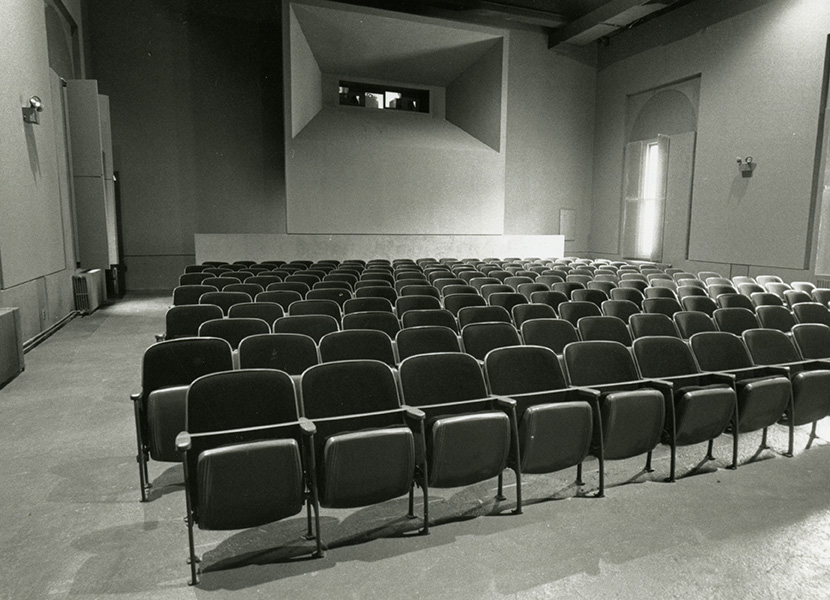
for us. In February 1973 Jerome Hill died. The Avon
Foundation, Jerome’s foundation behind the Anthology project,
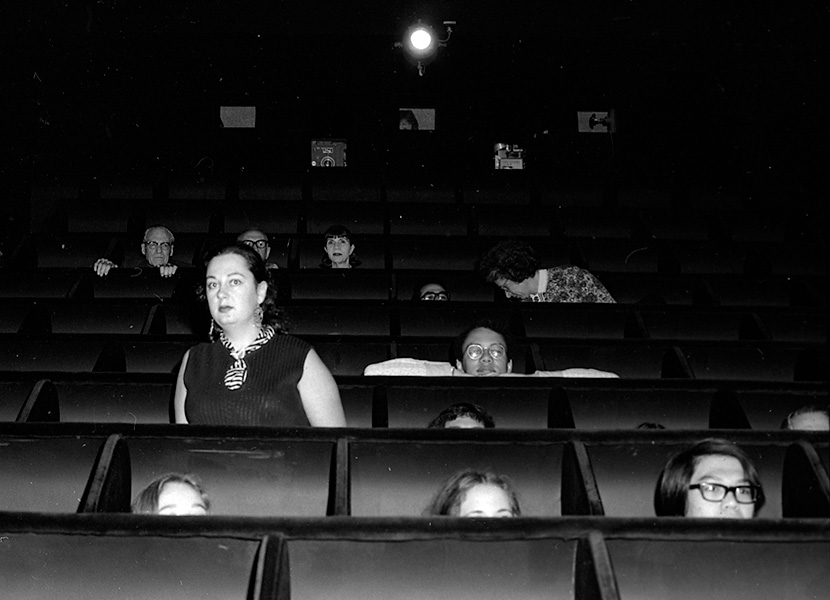
which had built a special, Invisible Cinema theater, designed
by Peter Kubelka, and had paid for the acquisition of all the
prints voted into the Essential Cinema collection, and the
running of Anthology was taken over by people who did not
share Jerome’s vision. All funding to the Anthology project
was cut off. Anthology had to move from the 425 Lafayette
Street location, first to 80 Wooster Street, then to 491
Broadway, and then to its present location.
The Essential
Cinema Repertory project was frozen until such time as another
visionary such as Jerome Hill will appear.
The Essential
Cinema Repertory, from its very inception, was strongly and
sometimes wildly attacked by those who were not familiar with
the history of the project, for exclusion of many important
films. They were not aware of the fact that the Essential
Cinema Repertory was intended to serve as a permanent critical
tool with new titles continuously added, including possibly
the titles that the critics of Anthology had in mind.
As one looks back through the last thirty years of the history of
cinema in the United States, one has to admit that even in its
unfinished state, the Essential Cinema Repertory collection,
as an uncompromising critical statement on the avant-garde
film of the period, has dramatically changed perceptions of
the history of the American avant-garde film. The avant-garde
film has become an essential part of cinema. –Jonas Mekas




